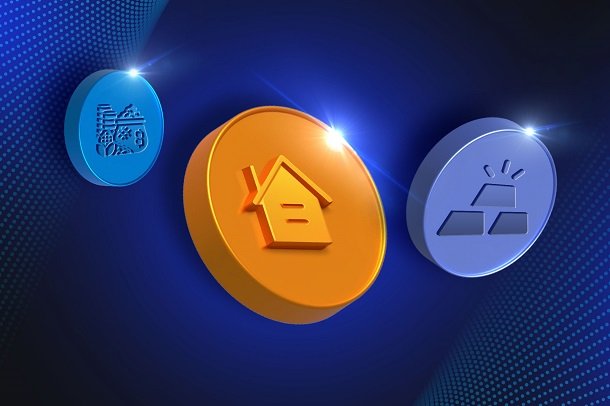
For years, the crypto space and the traditional financial world often felt like separate universes. One was seen as a volatile frontier of digital innovation, while the other was built on tangible, physical value. A powerful new trend is now bridging this divide, and it has the potential to redefine the very concept of ownership and investment. This trend is the tokenization of Real-World Assets (RWA), a process that is bringing everything from real estate to government bonds onto the blockchain. Understanding real-world assets crypto is becoming crucial for any investor looking to grasp the next evolutionary phase of digital finance.
At its core, this concept is about representing ownership of a physical or traditional financial asset as a digital token on a blockchain. Think of it as creating a digital twin for a piece of property, a work of art, or a corporate bond. These tokenized assets combine the stability and inherent value of the physical world with the efficiency, transparency, and accessibility of blockchain technology. This isn’t just a theoretical idea; it’s a rapidly growing sector that is unlocking trillions of dollars of previously illiquid capital for a global audience of investors.
Also Read: How to Buy Ethereum: The Complete Beginner’s Guide
The Bridge Between Tangible and Digital
So, how does this process actually work? Tokenization involves taking a real-world asset, legally validating its ownership, and then issuing digital tokens that represent a share of that asset. For example, a commercial office building worth millions could be tokenized into one million digital tokens. Each token would then represent a 0.0001% ownership stake in that property. These tokenized assets are then stored on a blockchain, making them easily transferable and tradable on digital asset exchanges.
The benefits of this system are profound. Firstly, it democratizes access to investment opportunities that were once reserved for the wealthy or institutional players. Through tokenization, you don’t need to buy an entire building; you can own a fraction of one with a much smaller amount of capital. Secondly, it introduces unprecedented liquidity into stagnant markets. Assets like fine art or real estate are notoriously difficult to buy and sell quickly. By converting them into tokenized assets, they can be traded as easily as any cryptocurrency, 24/7, on a global market. This fractional ownership and enhanced liquidity open up entirely new possibilities for portfolio diversification and wealth building.
Also Read: Crypto Wallets: Hot vs Cold Storage Comparison

Exploring the Landscape of Tokenized Assets
The types of assets now being brought on-chain are diverse and expanding rapidly. One of the most prominent categories is real estate. Tokenizing property allows for fractional ownership, enabling multiple investors to share in the potential rental income and appreciation of a building without the burdens of direct management. This application alone has the potential to revolutionize the global real estate market.
Another massive area is debt and fixed income. Companies and even governments are beginning to explore issuing bonds as tokenized assets. These digital bonds can streamline the issuance process, reduce costs, and make them available to a broader range of investors. Similarly, tangible commodities like gold, oil, and even agricultural products are being tokenized. Instead of taking physical delivery of a gold bar, an investor can hold a digital token that is fully backed by and redeemable for that physical gold stored in a secure vault. This provides the safety of a hard asset with the ease of a digital one.
Also Read: CEX vs DEX: Which Crypto Exchange Is Right for You?
Navigating the Opportunities and Considerations
For investors, the appeal of real-world assets crypto is a compelling blend of tradition and innovation. It offers a way to gain exposure to stable, income-generating assets like treasury bonds or commercial real estate within a crypto portfolio, potentially reducing overall volatility. The ability to earn yield from these traditional sources, but through decentralized finance protocols, is a key driver of current growth. Furthermore, the transparent nature of blockchain means the ownership history and legal status of a tokenized asset can be more easily verified than with traditional paper-based systems.
However, this emerging field is not without its considerations. The legal and regulatory framework for tokenized assets is still under development in many jurisdictions. The crucial question of what happens if the entity holding the physical asset goes bankrupt is paramount. Investors must prioritize platforms that offer clear legal structures, robust custody of the underlying asset, and full regulatory compliance. The promise of a token is only as strong as the legal guarantee that backs it. Thorough due diligence is essential, focusing on the transparency of the issuer, the mechanism for auditing the physical asset, and the redemption process.
The tokenization of real-world assets represents a monumental shift, moving blockchain technology beyond pure cryptocurrencies into the heart of the global economy. It promises a future where value can flow more freely, and ownership can be more accessible. For the forward-thinking investor, understanding this convergence of physical value and digital efficiency is no longer optional. It is an essential part of navigating the next chapter of finance, where the lines between the real world and the crypto world are becoming beautifully blurred.