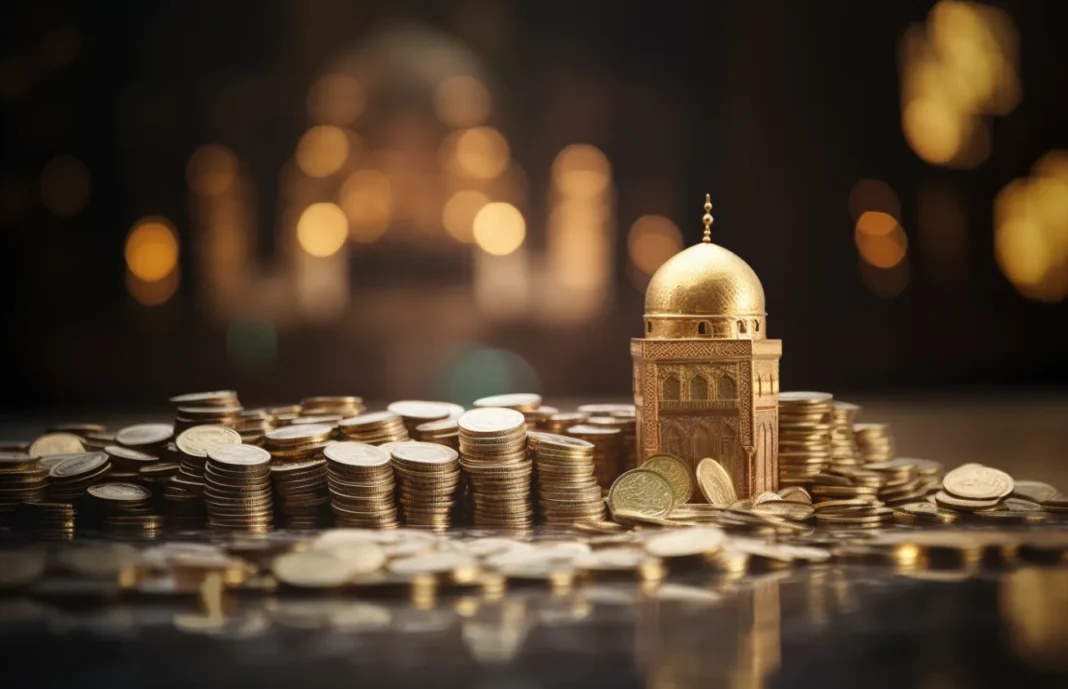
The intersection of cryptocurrency and Islamic finance might seem, at first glance, an unlikely pairing. One is a modern, digital, and often speculative asset class, while the other is a centuries-old system of ethical finance rooted in religious principles. Yet, across the Middle East, Southeast Asia, and beyond, this convergence is creating one of the most dynamic and rapidly growing sectors in the digital asset space. With the global Islamic finance market projected to approach twelve and a half billion dollars and a young, tech-savvy Muslim population seeking ethical investment opportunities, the demand for halal crypto solutions is surging. This is not a niche trend; it is a fundamental shift toward integrating faith-based values with the future of money.
The rise of crypto in Islamic finance is driven by a simple but powerful need: the desire for financial inclusion that does not compromise religious principles. For observant Muslims, participation in financial markets must align with Shariah law, which prohibits interest, excessive uncertainty, and gambling. For years, this created a gray area around digital assets. Now, a new wave of innovation is providing clarity, offering everything from Shariah-compliant staking to tokenized sukuk, and proving that blockchain technology can be a powerful vehicle for ethical and transparent finance.
Also Read: How to Buy Ethereum: The Complete Beginner’s Guide
The Core Principles: What Makes Crypto Halal or Haram?
To understand this market, one must first understand the fundamental filters of Islamic finance. These are not arbitrary rules but a framework designed to ensure justice, fairness, and shared responsibility in all economic activity. The three most critical principles are the prohibitions of Riba (interest), Gharar (excessive uncertainty), and Maysir (gambling).
Riba (Interest) is the most fundamental prohibition. Any guaranteed or predetermined return earned without asset ownership or genuine economic activity is considered unjust. In the crypto world, this means that many standard practices, such as interest-bearing lending platforms or margin trading with borrowed funds, are immediately problematic from a Shariah perspective.
Gharar (Excessive Uncertainty) refers to ambiguity or deception in contracts. Transactions must be transparent with clearly defined terms. While all markets have some uncertainty, crypto trading driven purely by hype, rumor, or blind speculation can cross into prohibited territory. Informed participation grounded in a project’s real-world utility is the acceptable alternative.
Maysir (Gambling) involves games of chance or speculative behavior disconnected from productive economic activity. In crypto, this often appears in high-leverage trading strategies, lottery-style tokens with no underlying purpose, or purely hype-driven meme assets. When trading becomes a substitute for gambling, it violates core Islamic principles.
Beyond these prohibitions, a halal crypto project must also demonstrate real utility and intrinsic value, contributing to societal good rather than merely facilitating speculation.
Also Read: CEX vs DEX: Which Crypto Exchange Is Right for You?
The Spectrum of Scholarly Opinion and Evolving Standards
Given the novelty of cryptocurrency, it is no surprise that scholarly opinions on its permissibility have varied widely. Early fatwas were often cautious, citing concerns over volatility, speculation, and the lack of intrinsic backing comparable to gold. Some scholars argued that assets like Bitcoin derive value solely from market consensus, likening them to fiat currencies without centralized Shariah oversight.
However, a more nuanced and permissive view has gained traction. Many contemporary scholars now regard cryptocurrencies as digital commodities or a form of digital property. They draw analogies to gold in terms of scarcity and store-of-value characteristics, provided the assets are used ethically and avoid the core prohibitions of riba, gharar, and maysir. This view is bolstered by the fact that major Layer 1 blockchains like Bitcoin, Ethereum, and Solana have been assessed by bodies like the Shariyah Review Bureau as not inherently conflicting with Islamic finance principles. The key shift is away from a blanket declaration and toward a conditional assessment: a cryptocurrency may be considered halal if it demonstrates real utility, transparency, and an absence of riba-based mechanisms.
Real-World Applications and Leading Projects
The theoretical alignment is now being translated into tangible products and platforms. A vibrant ecosystem of “decentralized Islamic finance” is emerging, built on principles of asset-backing, profit-sharing, and ethical governance.
One of the most significant developments has been the entry of major global exchanges into the space. Binance launched “Sharia Earn,” a staking service certified by Amanie Advisors, a leading Islamic finance advisory firm. This product allows users in markets like Saudi Arabia, the UAE, and Indonesia to earn passive income from assets like BNB, ETH, and SOL under a structured framework that ensures funds are directed toward halal ventures. Similarly, Luno Malaysia has expanded its Shariah-compliant staking options for Solana and Cardano, responding to growing demand from Muslim investors who want to ensure their investments align with Islamic principles. The platform features a dedicated category that allows users to verify an asset’s compliance status as classified by the Shariah Advisory Council of the Securities Commission Malaysia.
Beyond staking, new blockchain projects are being built from the ground up with Islamic finance at their core. Sidra Chain is a Layer-1 blockchain designed specifically to comply with Shariah law, incorporating a mobile-first mining model to democratize access. Its ecosystem includes features like halal supply chain verification and ethical DeFi products, processing millions of transactions for users worldwide. The HAQQ Network, which backs the Islamic Coin, is another major player, with over six million users and a commitment to allocate a portion of its issuance to charity.
The tokenization of real-world assets is also opening new frontiers. Tokenized sukuk (Islamic bonds) allow for fractional ownership of tangible assets like real estate or leased equipment, with returns derived from rent or profit rather than interest. This structure aligns perfectly with Shariah principles, and regulatory frameworks in GCC countries like Bahrain and the UAE are maturing to support these innovations, requiring full reserves and independent Shariah oversight.
A Growing Demand and a Path Forward
The market signals are clear. A report by INPUT highlights that the supply of Shariah-compliant crypto products is struggling to keep pace with booming demand, particularly among Gen Z Muslims, a vast majority of whom are already engaging with Islamic banking products. This is not a marginal demographic; it represents a global audience of nearly two billion people seeking to participate in the digital economy in a way that honors their faith.
For the individual investor, navigating this space requires a disciplined approach. It involves researching a project’s purpose and utility, analyzing its tokenomics for fairness, and seeking out credible Shariah certifications from bodies like AAOIFI. Platforms are responding by creating dedicated “halal zones” and Arabic-language support to make this due diligence easier.
The rise of crypto in Islamic finance is more than a market trend; it is a powerful validation that blockchain technology can serve ethical and spiritual purposes. By adhering to timeless principles of justice, transparency, and shared risk, this movement is building a more inclusive financial system. It proves that faith and innovation are not adversaries, but powerful partners in creating a more principled and equitable digital economy for all.